Why Older Homes in Provo Are Prone to Foundation Problems
If you own a home in Provo, there is a good chance your property has seen a few decades of Utah County weather. Many of the homes in and around the Joaquin historic home neighborhood and other established parts of town were built long before modern waterproofing standards existed. That does not mean they are unsafe, but it does mean the foundation is doing a lot of work with materials and methods that have had plenty of time to wear down.
Provo sits on soils that expand and contract with moisture, and the freeze-thaw cycles along the Wasatch Front put steady pressure on below-grade walls. When you combine that with aging concrete, original drainage that may be clogged or collapsed, and decades of small movements, you get the classic conditions for foundation problems signs. The earlier you recognize them, the more options you have, and the less likely a small issue turns into a major structural repair.
Basement Wall Cracks: What They Look Like and What They Mean
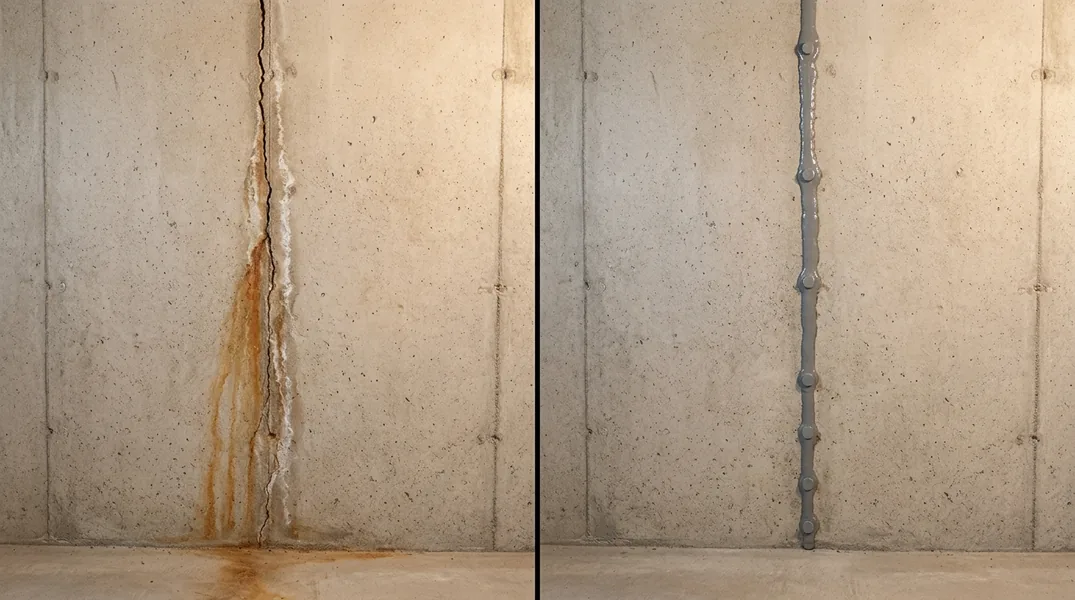
Not every crack is a crisis, but every crack is telling you something. In older Provo homes, hairline vertical cracks are common and often come from concrete curing or minor settling. Horizontal cracks are a different story. A horizontal crack, especially one that is widening or has a slight bulge around it, usually points to soil pressure pushing inward on the wall. Stair-step cracks in block foundations are another red flag because they often follow the mortar joints where movement is concentrated.
You should also pay attention to cracks that let water in during storms or spring snowmelt. Moisture staining, white powdery efflorescence, and damp spots along the base of the wall are all clues that water is finding a path through the concrete. If you are seeing any of these basement wall cracks, it is worth having a professional take a look before the next wet season. A proper assessment of your Basement Waterproofing needs starts with understanding what the cracks are actually telling you.
Bowing Basement Walls and Other Structural Warning Signs
A bowing basement wall is one of the most serious signs a homeowner can find. It usually starts subtly: the wall looks a little out of plumb when you hold a straightedge against it, or the top of the wall has pulled away from the floor joists above. Over time, the middle of the wall pushes inward. This is almost always caused by hydrostatic pressure from saturated soil outside the foundation, and it will not correct itself. Ignoring a bowing wall can lead to cracked drywall upstairs, sticking doors, and in the worst cases, structural failure.
Other signs worth watching for include doors and windows that suddenly stick, floors that feel uneven or sloped, and gaps between exterior walls and the foundation. In older homes, it is easy to write these off as quirks of an old house, but when several show up at once, they usually point to a foundation that is moving. If you are noticing these patterns, it is a good time to schedule a free estimate so you know exactly what you are dealing with.
How Water Below Grade Accelerates Older Home Foundation Repair
Water is the common thread in most foundation issues. When gutters discharge next to the foundation, when the grading slopes toward the house, or when the original drain tile has silted in, water collects against the basement wall and has nowhere to go. Over years, that pressure works on the concrete and mortar, and what started as a damp basement becomes a structural concern. This is why older home foundation repair so often begins with water management rather than concrete work alone.
Depending on what we find, the solution might involve an Interior Drain Tile System to capture water before it reaches the floor, or Exterior Basement Waterproofing to relieve pressure from the outside. In many cases, a combination of Foundation Waterproofing and improved drainage is what protects the structure long term. Homeowners in nearby Orem and Lindon deal with the same soil and weather conditions, so the approach is similar across the valley.
Foundation Problems Signs Near Me: When to Call a Provo Waterproofing Professional
Some issues are cosmetic, and some are not. As a general rule, call a professional if you see horizontal cracks, a wall that is visibly bowing, water entering the basement after rain, or multiple symptoms at once (sticking doors plus cracks plus damp walls). These are the foundation problems signs that tend to get worse, not better, and the cost of waiting is usually higher than the cost of an inspection. A trained eye can tell the difference between normal settling and active movement.
Provo Waterproofing works with homeowners throughout Pleasant Grove and the surrounding area, and we are happy to walk you through what we see and what your options are. You can reach us at (385) 412-7363 or request a free estimate online. If you want a sense of what projects typically run before you call, our pricing page gives you a straightforward starting point. The goal is simple: keep your older home dry, stable, and standing strong for the next generation.
Looking for a professional basement waterproofing contractor in Provo? Provo Waterproofing responds fast for all your basement waterproofing needs.
Get a Free QuoteOur services: Basement Waterproofing · Interior Drain Tile System · Exterior Basement Waterproofing