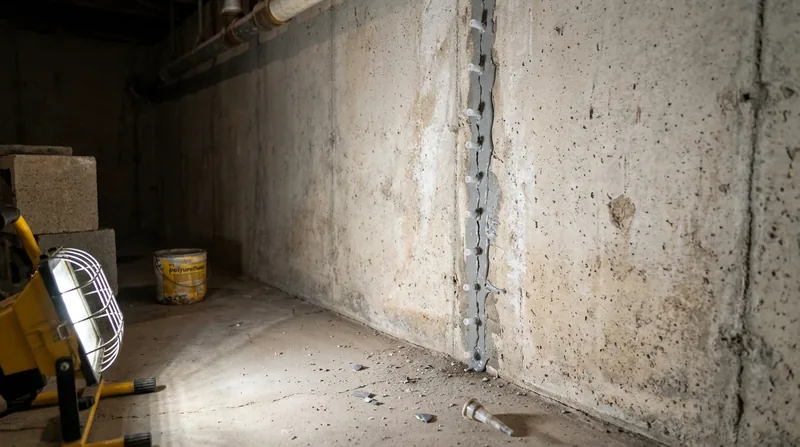




Provo sits on the old lake bed of Lake Bonneville, where silt and clay hold water against your foundation long after the spring snowmelt runs off the Wasatch. In the Joaquin neighborhood and Historic Provo, 1900s brick bungalows sit on stone and early block foundations that have been moving with the seasons for a hundred years. Up on the East Bench and out toward Timp Haven, 1950s to 1970s ranches and split-levels show the same pattern: a hairline crack in the poured wall that widens every freeze-thaw cycle and lets water in with the first summer thunderstorm. Foundation Crack Repair in Provo means matching the right method to the crack you actually have, not smearing hydraulic cement over a symptom that comes back every spring. We inspect the crack, check for efflorescence and wall movement, and tell you plainly whether epoxy injection will close it for good or whether hydrostatic pressure is the real problem. If the wall is wet across a wide area rather than at one seam, we will say so and point you to basement waterproofing.
Why Crack Repair Matters More on Provo's Lake-Bed Clay
Much of the Provo valley floor is glacial clay and lake-bed silt left by ancient Lake Bonneville, and that soil swells when it soaks up snowmelt and shrinks hard in our dry summers. That cycle flexes foundation walls year after year, and the cracks that open are the ones that let water through. Near Utah Lake the water table sits close to the surface, so a crack that looks minor in July can weep steadily by March.
- Hairline cracks in poured walls let in water under hydrostatic pressure after a canyon thunderstorm dumps runoff against the uphill side.
- Stair-step cracks in block or stone foundations in Historic Provo often signal settlement, not just shrinkage.
- White efflorescence on the inside face means water is already moving through the wall and drying on your side.
- Horizontal cracks and a wall that is starting to bow need structural repair, not injection alone.
We sort those cases apart before anyone touches a tube of epoxy, because the wrong repair just moves the water to the next crack.
Key info: A homeowner in the East Bench called us about a wet spot on the basement wall every March. The crack was a 1/16-inch shrinkage crack, and epoxy injection closed it in one visit. Two streets over, a block foundation in Joaquin showed a stair-step crack with 3/8 inch of offset, and that one needed structural repair before any sealing.
For the official rules on structural foundation work and permits in Provo, check the City of Provo building department before you schedule anything.
How We Repair Foundation Cracks in Provo, Step by Step
Every job starts with a walk of the basement and the outside grade. We look at the crack width, whether the wall has moved, where the downspouts discharge, and how the ground slopes away from the footing. Only then do we pick the method, because a non-structural crack and a moving wall are two different jobs.
- We inspect the crack inside and out and measure width, offset, and any sign of bowing.
- We clean the crack and drill injection ports at the right spacing for the width and depth.
- We seal the surface, remove the ports, and check the repair after the material cures.
- We address the water source with grading, downspout extensions, or a drain system if the crack was fed by hydrostatic pressure.
If the crack turns out to be a symptom of a wider water problem, we tell you that on the spot and quote the right fix instead of sealing it twice.
Key info: A split-level in Timp Haven had a leaking crack at the tie-rod hole and a downspout that dumped right at the corner. We injected the crack with polyurethane and extended the downspout 6 feet out, and the wall stayed dry through the next melt. Sealing the crack without fixing the discharge would have brought the leak back in one season. See how we handle foundation waterproofing when the whole wall is the problem.
Crack Repair Methods We Use and When Each One Fits
There is no single patch that works on every crack. The table below shows how we match the method to the crack, and we explain the reasoning before we start so you know what you are paying for.
| Approach | Description | Best for |
|---|---|---|
| Epoxy injection | Structural epoxy bonds the crack faces back together and restores wall strength. | Non-leaking structural cracks in poured walls, 1/16 to 1/4 inch wide. |
| Polyurethane injection | Flexible foam expands into the crack and stops active leaks. | Actively leaking cracks and hairline cracks that move with freeze-thaw. |
| Surface seal and parging | Cementitious seal over the crack face with proper prep. | Minor shrinkage cracks where injection is not warranted. |
| Carbon fiber straps | Straps anchor the wall and stop further bowing. | Bowing walls with horizontal cracks and inward movement. |
| Wall anchors | Anchors pull the wall back toward the soil and hold it. | Walls that have moved inward under clay pressure. |
If your crack comes with a wall that is clearly moving, we will steer you to bowing wall repair rather than sell you an injection that cannot hold.
Foundation Crack Repair Cost in Provo: What to Expect
Most single-crack injections in Provo start at $450, and that covers the inspection, port drilling, injection, and cleanup. The price climbs when the crack is wider, when access is tight, or when the repair needs structural hardware instead of just injection. A stair-step crack in an old block foundation is a different job than a hairline in a 1990s poured wall, and we quote it that way.
Factors that move the number: crack width and length, whether the wall has moved, how many cracks you have, whether we can reach the wall from inside, and whether the water source needs grading or drain work alongside the repair. Getting two or three estimates is smart, and any honest contractor will walk you through the reasoning behind the number. Our full pricing overview lays out the ranges in more detail.
We do not quote a number over the phone for a structural crack, because nobody can price what they have not seen. The free inspection is where the real number comes from.
Foundation Crack Repair Near Me: How to Vet a Contractor in Provo
When you search for foundation crack repair near me in Provo, you will get a mix of dedicated waterproofing specialists and general foundation firms. Ask each one the same questions and compare the answers, not just the price. A contractor who cannot tell you why they chose epoxy over polyurethane is not inspecting, they are estimating.
- Confirm the contractor is licensed and insured, and ask for a certificate of insurance before work starts.
- Get two or three written estimates and compare the method, not only the total.
- Ask for local references, especially on homes with the same foundation type as yours.
- Ask who pulls the permit if the repair is structural, and verify the rules with the City of Provo building department.
- Check HOA requirements if you live in a subdivision along the bench, since some have rules on exterior work.
Get your questions answered before you sign anything. You can reach us through the contact page or by phone at (385) 412-7363.
Foundation Crack Repair in Provo: Pricing Guide
| Service | Price | Details |
|---|---|---|
| Single crack epoxy injection | Starting at $450 | Covers inspection, port drilling, epoxy injection, and cleanup for one non-structural crack. |
| Polyurethane injection for active leak | Starting at $550 | Flexible foam for a leaking crack; price rises with crack length and access difficulty. |
| Multiple cracks in one wall | Starting at $850 | Priced per crack once we map the wall; more cracks mean more ports and material. |
| Structural repair with carbon fiber or anchors | On estimate | Bowing or offset walls need an on-site look before any number is given. |
| Travel | Included | In Provo and surrounding areas, no separate call-out or mileage fee. |
| Estimate | Free | Response within 24h at (385) 412-7363, no obligation to book. |
Indicative pricing, the exact cost depends on square footage, finish, and site access. Free personalized estimate within 24h at (385) 412-7363.


